


Elon Musk is a master of the “big number” and the “bold plan.” He has spent a career disrupting industries by looking at complex problems through the cold, logical lens of an engineer
.
As someone who also graduated with an engineering degree before becoming an orthopedic surgeon, I usually find myself cheering for the logic of automation. We need more of it in healthcare.
At the Indiana Orthopedic Institute, we are already pushing the boundaries with computer-assisted navigation and augmented reality (AR) to pinpoint surgical targets with sub-millimeter precision.
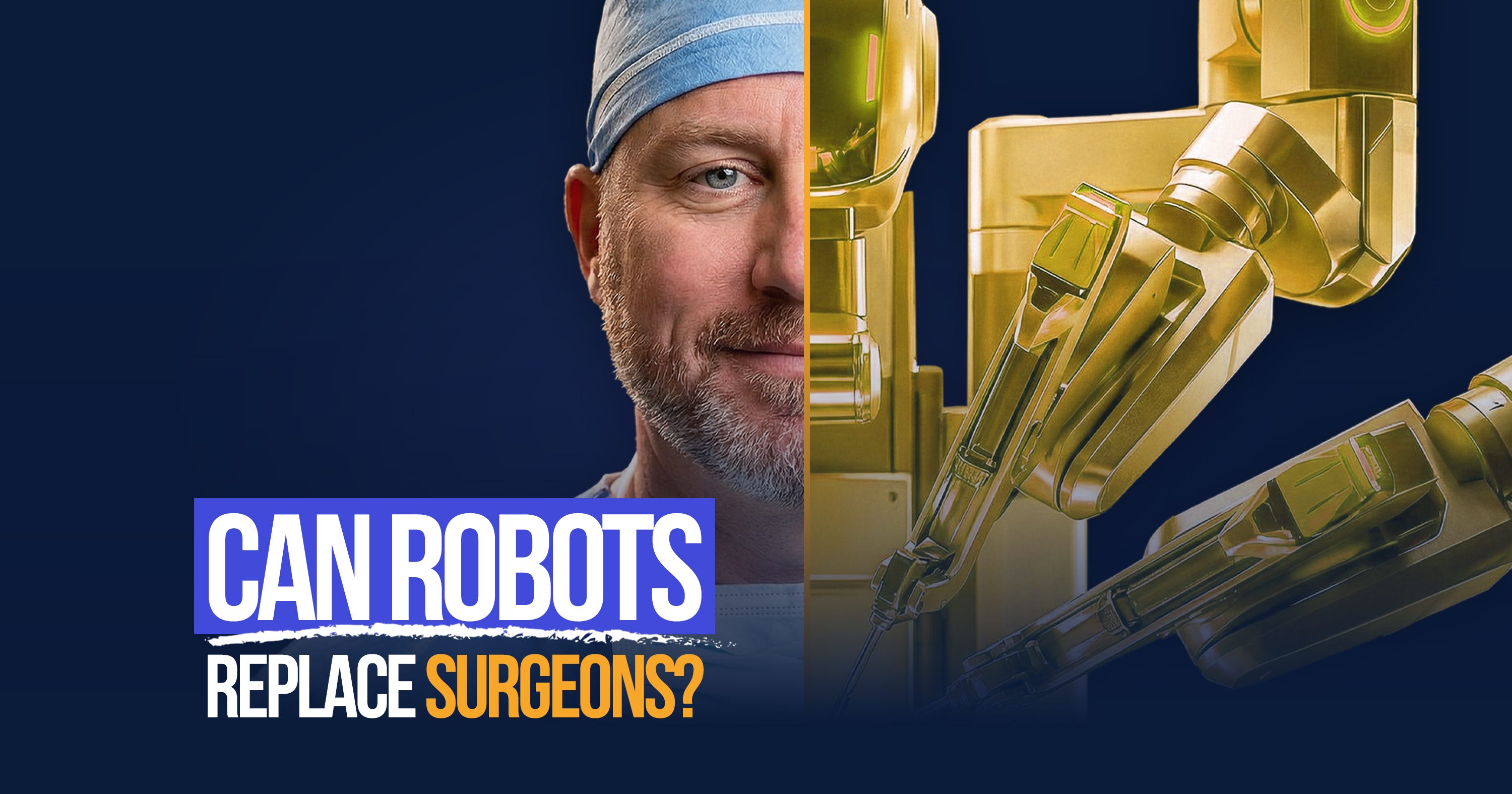
But Elon’s latest claim - that his Tesla Optimus robots will be more skilled than the best surgeons and effectively replace us within 36 months - suggests he understands code far better than he understands the human condition.
He is underestimating the “friction” of the real world. In medicine, that friction is called human nuance.
And, that is something that will NEVER be replaced by a robot in our lifetime.
The Logic of Code vs. the Chaos of Biology
From an engineering perspective, surgery looks like a series of calculated physical movements. If a part is broken, you swap it. If a joint is worn, you resurface it.
But after 10,000+ joint replacements, I can tell you that a patient doesn’t just bring a “broken part” into my OR. They bring a lifetime of dysfunction, a complex web of comorbidities, and a massive amount of fear.
Data shows that successful joint replacement isn’t just about the 60 minutes spent under the knife. It is a multidisciplinary coordination involving standardized perioperative protocols and, most importantly, careful patient selection.
A robot can calculate a bone cut, but it cannot yet navigate the “hip-spine relationship” or the psychological readiness of a patient who has been told their condition is “worse than death”.
The Day I Failed a Patient (Despite 10,000 Successes)
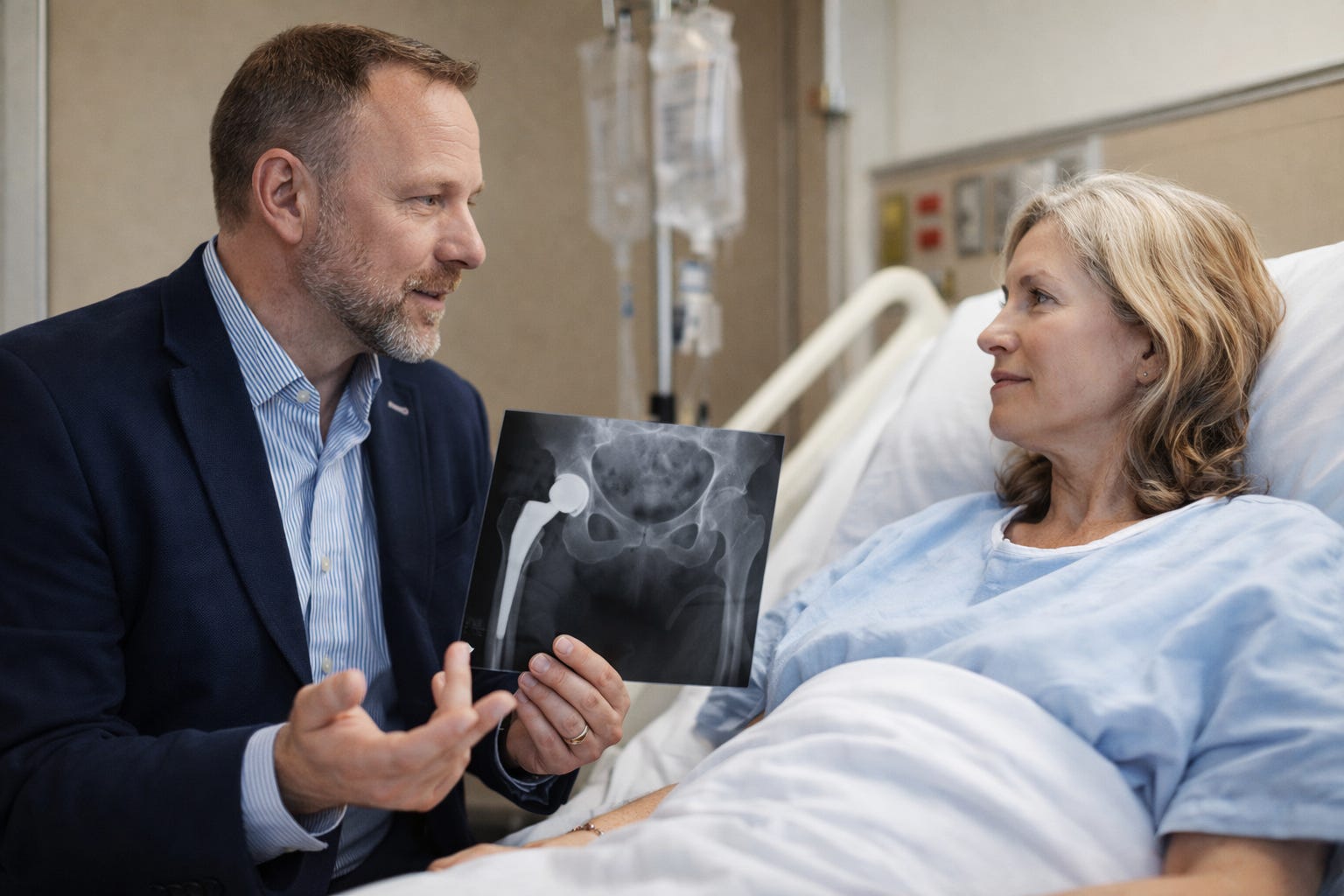
I recently had a moment of profound self-reflection triggered by a patient I’ve known for a decade.
By all objective metrics, I am at the top of my game. I am the President of AAHKS, I’ve performed five figures’ worth of surgeries, and my outcomes are in the top 10% nationally. But with this particular patient, I failed. Not because of my “very good hands” or my psychomotor skills, but because I didn’t make her feel heard.
That interaction was a stark reminder: My “grit” and surgical skill are only half the job. The other half is the human connectivity that allows a patient to trust me enough to put them to sleep and let me change their life.
Elon’s Optimus might eventually be able to tie a suture, but it will never be able to look a crying patient in the eye and say, “I understand your pain, and we are going to get through this together.” It will never receive the four-week post-op hug that is the true currency of a great surgeon.
Data Proves Humanity Matters
This isn’t just soft sentiment; it’s hard science.
Expectation Management: Research that I’ve done that is published in the Journal of Arthroplasty confirms that patient satisfaction is directly correlated with how well a surgeon manages expectations through communication.
The “Human” Edge: My own data, when put up against robotic-assisted unicompartmental knee results, shows that an experienced surgeon can meet or exceed robotic accuracy.
Why? Because we adjust for tissue tension and bone quality in real-time - variables that are incredibly difficult to “code.”Outcome Factors: We know that things like BMI, gender, and social support impact readmission and complication rates. A robot sees a data point; a surgeon sees a person who needs a specific recovery plan.
The Future: Enhancement, Not Replacement
Don’t mistake my bluntness for being “anti-tech.” I am a fierce advocate for disruption. We use computer navigation for all knee replacements because it reduces blood loss and ensures optimal alignment. We are currently developing AR visors so we can see overlaid surgical targets without ever looking away from the patient.
Technology should be used to make us super-human, not to remove the human.
Elon Musk’s career is littered with bombastic timelines that didn’t account for the friction of reality. In the world of high-stakes surgery, that friction is the doctor-patient relationship.
I will continue to design the implants of the future and build the most efficient ASCs in the country. But I will also continue to treat my patients like family.
Until a robot can offer a post-operative hug and mean it, the “36-month timeline” is nothing more than a myth.
What do YOU think? Is AI a tool or a threat to the sacred doctor-patient relationship?
Couldn’t agree more. If there is any place that still requires our humanness, it’s healthcare.
A powerful reality check that reframes surgical automation as augmentation, not replacement, and reminds us that empathy, judgment, and trust remain irreducibly human skills