


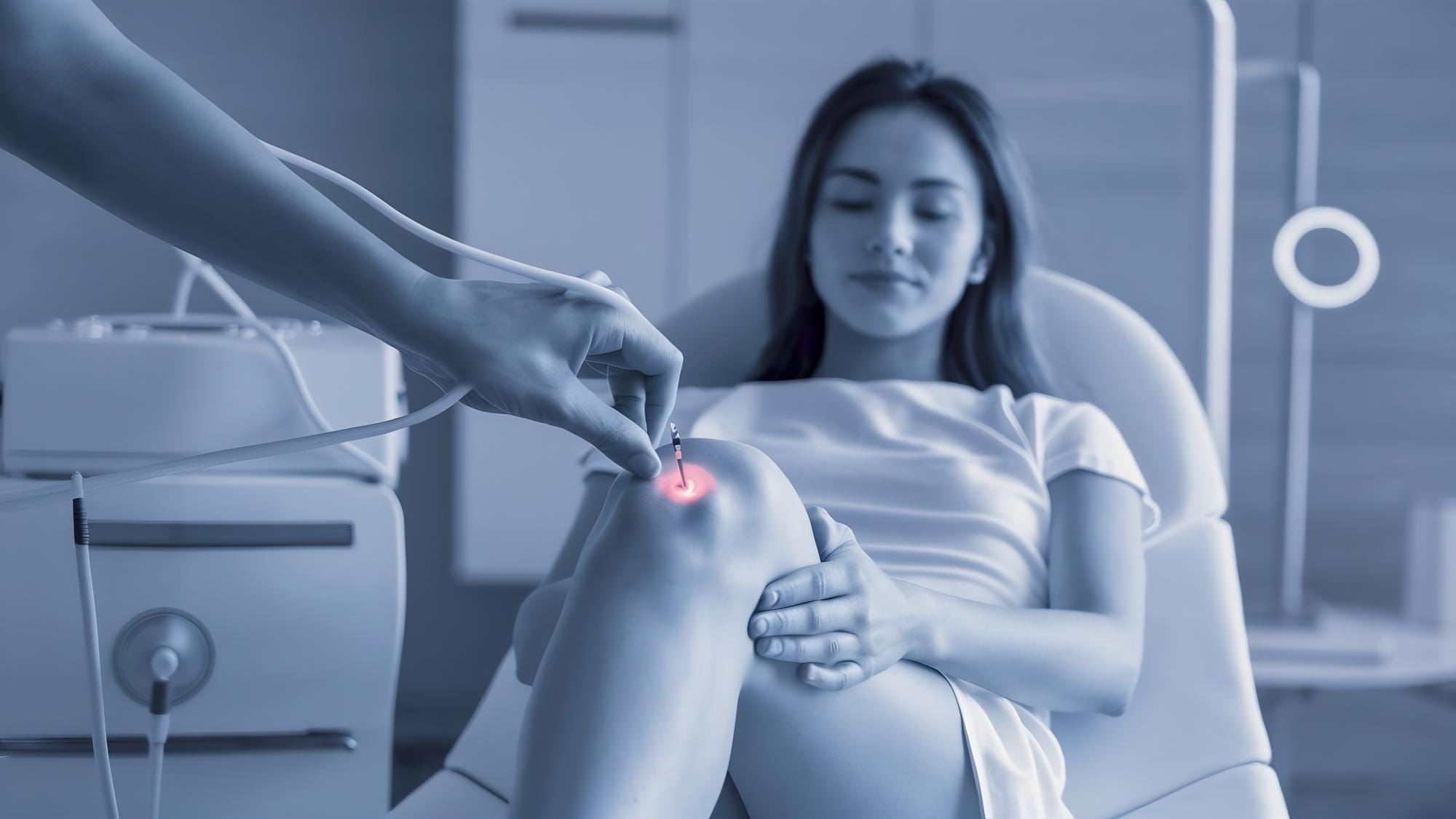
Hospitals are marvels of modern engineering. They are designed to save lives. They are built to manage sepsis, treat heart attacks, and battle multi-organ failure. They are optimized for the sick.
But here is the engineering flaw in our current system: Most joint replacement patients aren’t sick. They are broken.
They have a mechanical failure, a worn-out gear in their hip or a misaligned hinge in their knee. They don’t need a facility designed for illness; they need a facility designed for reconstruction.
For decades, we forced healthy patients into a sick-care ecosystem. We exposed them to hospital-acquired infections. We let them languish in beds because “that’s how it’s always been done.” We accepted the friction of a massive bureaucracy as a necessary evil.
I refused to accept that friction any longer.
The Inefficiency of the “General Purpose” Machine
In engineering, a machine designed to do everything rarely does any one thing with maximum efficiency. A hospital is a general-purpose machine.
When I operate in a massive hospital system, my healthy 65-year-old active golfer is competing for resources with the trauma victim and the pneumonia patient. The protocols are built for the lowest common denominator of health, not the highest.
This isn’t just annoying; it is bad engineering. It introduces unnecessary variables. It increases cost. It dilutes the focus of the care team.
The Blueprint for Independence
In 2018, I co-authored the Position Statement on Outpatient Joint Replacement with the leadership of the AAHKS, The Hip Society, and The Knee Society. We laid out the roadmap. We stated clearly that outpatient surgery wasn’t reckless, it was the future, if engineered correctly.
We identified the essential elements for safety: robust patient selection, standardized anesthesia protocols, and rigorous discharge planning. We warned that you can’t just “try” outpatient surgery; you have to build a system capable of it.
But writing the guidelines wasn’t enough. I realized I couldn’t fully execute this vision inside the “General Purpose Machine.” I had to build a “Special Purpose Machine.”
Building the Vertically Integrated Practice
This is why I founded the Indiana Orthopedic Institute (IOI). We didn’t just move the surgery out of the hospital; we re-engineered the entire ecosystem.
In our Ambulatory Surgery Centers (ASCs), every person,rom the receptionist to the anesthesiologist, has one singular focus: Musculoskeletal Health.
We control the inputs: We use rigorous risk-stratification (like the OARA score) to ensure the right patient is in the right setting.
We control the process: Our anesthesia protocols are tuned for rapid mobilization, avoiding the nausea and over-sedation that keep patients bedridden.
We control the output: Patients go home the same day, recovering in their own environment, away from the pathogens of a sick ward.
Innovation is Structural
We often think innovation is a new implant. But the most disruptive innovation in healthcare right now is structural.
It is the shift from the Hospital to the ASC. It is the shift from “Fee-for-Service” to “Value-Based Care.”
By stripping away the bloat of the hospital administration, we can deliver care that is:
Higher Quality: Specialized teams make fewer mistakes.
Lower Cost: We eliminate the overhead of the ICU and the ER that our patients don’t need.
Better Experience: Patients feel like customers, not inmates.
The Bottom Line
Hospitals will always be necessary for the sick. But for the broken? We can do better.
We have proven that with the right engineering, the right data, and the right leadership, we can decouple routine surgery from the hospital system entirely.
We didn’t just build a clinic. We built a machine optimized for wellness.
R. Michael Meneghini, MD
If you liked this, share it with an administrator who thinks “we’ve always done it this way” is a valid strategy. Next, I’m discussing “The ‘Good Enough’ Trap”, why the implant is perfect, but the patient is still in pain.
Looking at any issue or problem with a new lens leads to new ways of thinking and breakthroughs ultimately.
It feels like sending every minor repair back to the factory.
Expertise increases, but responsiveness disappears.
When distance from reality grows, tension rises.
Clarity returns when authority and responsibility move closer to the work itself.