


I grew up eating like most Americans.
Cereal for breakfast. Chips and a sandwich for lunch. Whatever came out of a box or a bag at dinner when the schedule was too full to think about food. I was a competitive athlete. I was thin. I told myself the food was fine because my body looked fine.
It was not fine. I just could not see the damage yet.
The wake-up came gradually, then all at once - the way most important realizations do. I started tracking my own labs. I started reading the metabolic research, not the headlines. And I started connecting what I was seeing on my operating table to what my patients had been eating for decades. The inflammation. The tissue quality. The joint architecture of people in their fifties who looked, from the inside, like they were decades older.
Food did that. Specifically, the industrially engineered, deliberately addictive, government-subsidized products that the food industry has spent fifty years pretending are food.
I changed what I ate. My labs changed. My energy changed. My surgical performance changed.
And I got angry. Because none of this was accidental.
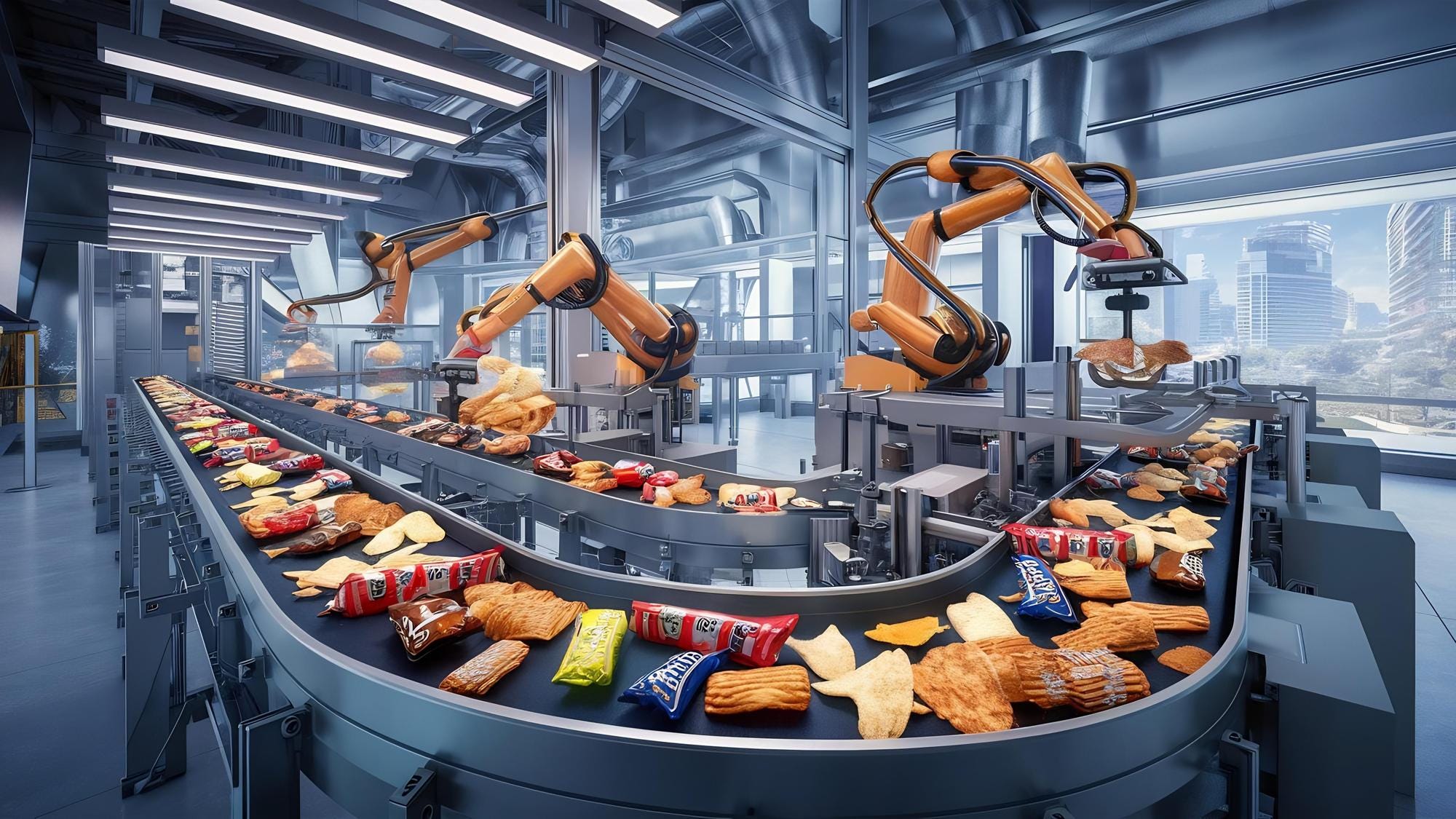
This Was Engineered - and We Have the Documents to Prove It
On April 8, 1999, eleven CEOs of America’s largest food companies - Kraft, Nabisco, General Mills, Procter & Gamble, Coca-Cola, Mars, and others - gathered secretly at Pillsbury headquarters in Minneapolis. There were no reporters. No minutes taken. No recordings made.
Kraft Vice President Michael Mudd took the stage and delivered a 114-slide presentation. His message: the industry’s products were driving the obesity epidemic, the science was clear, and collective action was the only path that would not end in congressional hearings and class-action litigation. He pleaded with the room. He named the stakes. He laid the evidence at their feet.
The CEO of General Mills stood up, pushed back, and the meeting ended without a single meaningful commitment.
This is not rumor. It is documented in Salt Sugar Fat by Pulitzer Prize-winning journalist Michael Moss - sourced from internal records and firsthand interviews with people in that room.
What followed was decades of investment in what the food industry calls “the bliss point” - the precise combination of sugar, salt, fat, and texture engineering that maximizes consumption and overrides the brain’s natural satiety signals.
Frito-Lay hired neuroscientists. Coca-Cola funded research designed to confuse the public about sugar’s role in obesity. General Mills engineers spent years calibrating the melt-in-your-mouth disintegration rate of Cheetos, because a snack that dissolves quickly registers fewer calories to the brain and keeps the consumption loop open.
This is not conspiracy theory. This is documented corporate strategy, confirmed in internal memos, depositions, and investigative reporting.
It is the tobacco playbook. Beat for beat.
Philip Morris - which owned Kraft for two decades - used the same internal research architecture to understand addiction and the same public relations machinery to deny it. The scientists who helped design nicotine delivery optimization in cigarettes were later consulting on flavor enhancement for processed foods. The connection is not metaphorical. It is organizational and personnel-level.
Tobacco killed people slowly and publicly, and it took fifty years and congressional testimony to hold it accountable.
Ultra-processed food is doing the same thing. At larger scale. With a better lobbying operation.
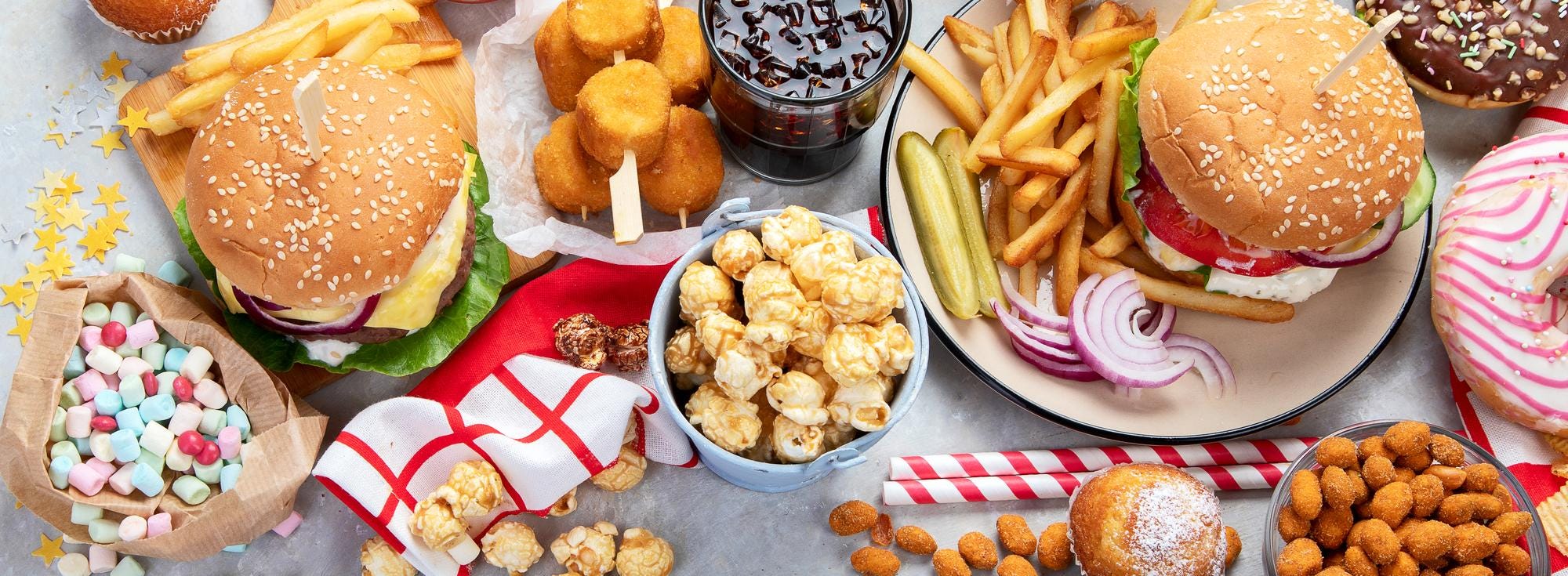
What “Ultra-Processed” Actually Means - and Why the Label Matters
The NOVA classification system, developed by researchers at the University of Sao Paulo, defines ultra-processed food not by individual nutrients but by industrial formulation: products that contain ingredients you would not find in a home kitchen - emulsifiers, flavor modulators, colorants, humectants, texturizers - assembled to maximize palatability, shelf life, and consumption rate.
We are not talking about bread or cheese. We are talking about products engineered in laboratories to behave differently in your brain than whole food does.
The research on what these products do is no longer preliminary. A landmark 2019 randomized controlled trial published in Cell Metabolism - led by Kevin Hall at the NIH - was the first to demonstrate causally, in a controlled setting, that ultra-processed food drives overconsumption. Participants eating ultra-processed diets consumed an average of 508 additional calories per day compared to matched whole-food diets, despite being given unrestricted access to both. They ate faster. They gained an average of 0.9 kg over just two weeks. The effect was not explained by differences in sugar, fat, sodium, or fiber content alone - it was something about the industrial formulation itself.
508 calories per day. Unintentionally. In a controlled research setting where the diets were matched calorie-for-calorie on paper.
That is not weak willpower. That is a neurologically targeted product working exactly as designed.
The addiction science has moved even further. Ultra-processed foods activate the same dopaminergic reward pathways as addictive substances. A 2023 review published in the British Medical Journal - synthesizing evidence across 281 studies from 36 countries - concluded that ultra-processed food addiction affects approximately 14% of adults and 12% of children globally, meeting formal DSM-5 diagnostic criteria for substance use disorder. Not metaphorical addiction. Clinical addiction, by psychiatric definition.
Fourteen percent of the adult population addicted to a product that is legally sold in every school, every hospital, every airport, and every gas station in America. And subsidized by the federal government.
What I See in the Operating Room
I want to make this concrete, because the population-level statistics can feel abstract until you are standing inside a patient.
Joint replacement surgery gives you an unusually direct view of what a lifetime of systemic inflammation does to human tissue. I have performed over 10,000 joint replacements. I can tell you that the difference between a patient who has spent decades eating a whole-food diet and one who has spent decades on ultra-processed food is visible - not just in their weight or their comorbidity list, but in the tissue itself.
Tissue quality is worse. Healing is slower. The inflammatory burden these patients carry into surgery elevates their complication risk before I make the first incision. Post-operative infection rates are higher in patients with metabolic syndrome driven by diet. Readmission rates are higher. Recovery timelines are longer.
I am not describing outliers. I am describing a pattern that any surgeon who operates at volume has seen repeatedly and that the outcomes data confirms.
The American Joint Replacement Registry data and multiple institutional studies have documented the association between obesity, metabolic syndrome, and worse surgical outcomes in joint replacement. The complication odds are not marginal. Obesity class II and III patients carry substantially elevated risks of periprosthetic joint infection, wound complications, and aseptic loosening.
Ultra-processed food is a primary driver of the metabolic syndrome that creates those patients.
The food industry created the problem. The healthcare system - including surgeons like me - spends billions managing the downstream consequences. And nobody in the chain is connecting those two facts in any policy that changes the upstream behavior.

The Government Is Funding Both Sides of This War
Here is the part that should make you genuinely angry.
Since 1995, corn subsidies alone have exceeded $116 billion - the same crop that gives us high-fructose corn syrup. In 2024 alone, Congress authorized more than $40 billion in combined commodity and disaster payments, the majority flowing to corn, soy, and wheat - the raw inputs for the ultra-processed food supply. High-fructose corn syrup, refined seed oils, processed soy derivatives: these are not cheap because they are efficient. They are cheap because American taxpayers subsidize the crops that make them.
At the same time, Medicare and Medicaid spend hundreds of billions annually managing the chronic disease load - diabetes, cardiovascular disease, obesity-related joint deterioration - that ultra-processed food consumption drives.
We are paying to make the poison cheap and then paying again to treat the poisoning.
According to a 2024 peer-reviewed analysis published in The Milbank Quarterly - drawing on 23 years of OpenSecrets data - the ultra-processed food industry spent $1.15 billion on federal lobbying between 1998 and 2020. More than Big Tobacco. More than alcohol. More than gambling.
That money successfully blocked meaningful front-of-package warning labels, fought sugar taxes in every major legislative context, and funded a generation of nutrition research designed to shift blame from processed food to individual behavior.
Sound familiar? It should. The tobacco industry wrote that playbook first.
What Actually Changes This
I changed my own diet because I read the research and I looked at my own labs and I made a decision that I was not willing to accept the standard American metabolic trajectory as inevitable.
That required no superhuman feat of willpower. It required removing the engineered food from my environment and replacing it with food that does not hijack the satiety system. Within weeks, the appetite patterns changed. The cravings that felt biological were, in fact, largely manufactured - and they diminished when the manufacturing stopped.
That is the most important practical truth in this entire conversation: this is not primarily a willpower problem. It is an environment problem. And you can change your environment.
But I also want to be clear about something. Individual action is necessary. It is not sufficient.
The same logic that says “smokers should just choose not to smoke” was used for fifty years to deflect from tobacco accountability. Personal responsibility matters. It does not absolve the companies who deliberately engineered the addiction, the lobbyists who blocked the regulation, or the politicians who took the money and protected the system.
Both things are true. You have to change what you eat. And the industry that spent fifty years engineering your overconsumption should face the same reckoning the tobacco industry eventually faced.
We are not there yet. But the science is no longer on their side.
The breakfast cereal in the brightly colored box. The chips engineered to dissolve before your brain counts the calories. The “low fat” products loaded with sugar to compensate for the removed fat. The snacks formulated by the same corporate lineage that spent decades optimizing nicotine delivery.
None of this was designed to feed you.
It was designed to keep you consuming. And it worked exactly as intended.
You can opt out. Start there.
And then get angry about the system that made opting in the default.
That is the incision point.
What changed things for you? Was it your labs? A health event?
Or are you still in the middle of figuring it out?
Tell me below. Would love to have a conversation.
- Dr. Michael Meneghini
This is a killer article and truth. This goes back decades and needs to change now.
Stop eating those poison processed foods.
Thank you for this article. I’m an occupational therapist who works with patients who are post-op large joint replacement. I appreciate your insight, experience, and advocacy.