


My patients don’t just come to me in pain.
They come to me exhausted. They come with type 2 diabetes, hypertension, and a knee that gave out, managing three chronic conditions at 55 that their parents didn’t have at 70.
They come having done, more or less, what they were told. They bought what was on the grocery shelf. They ate what was affordable. They fed their kids what was available at the school cafeteria and the drive-through and the gas station on the way home from work.
And somewhere in that chain of ordinary decisions, something went very wrong.
I trained at Mayo Clinic. I hold an engineering degree from Rose-Hulman. I have performed more than 10,000 joint replacements. I have sat on the boards of the largest orthopedic surgery organizations in the world. I see the consequences of the American food system in the operating room every single week.
What I see is not bad luck. It is not genetics. It is the predictable, documented, and entirely preventable result of a food supply that has been engineered for profit at the direct expense of human health, for decades, with the full knowledge of the people doing it.
I am done softening that statement.
What Is Actually In Your Food
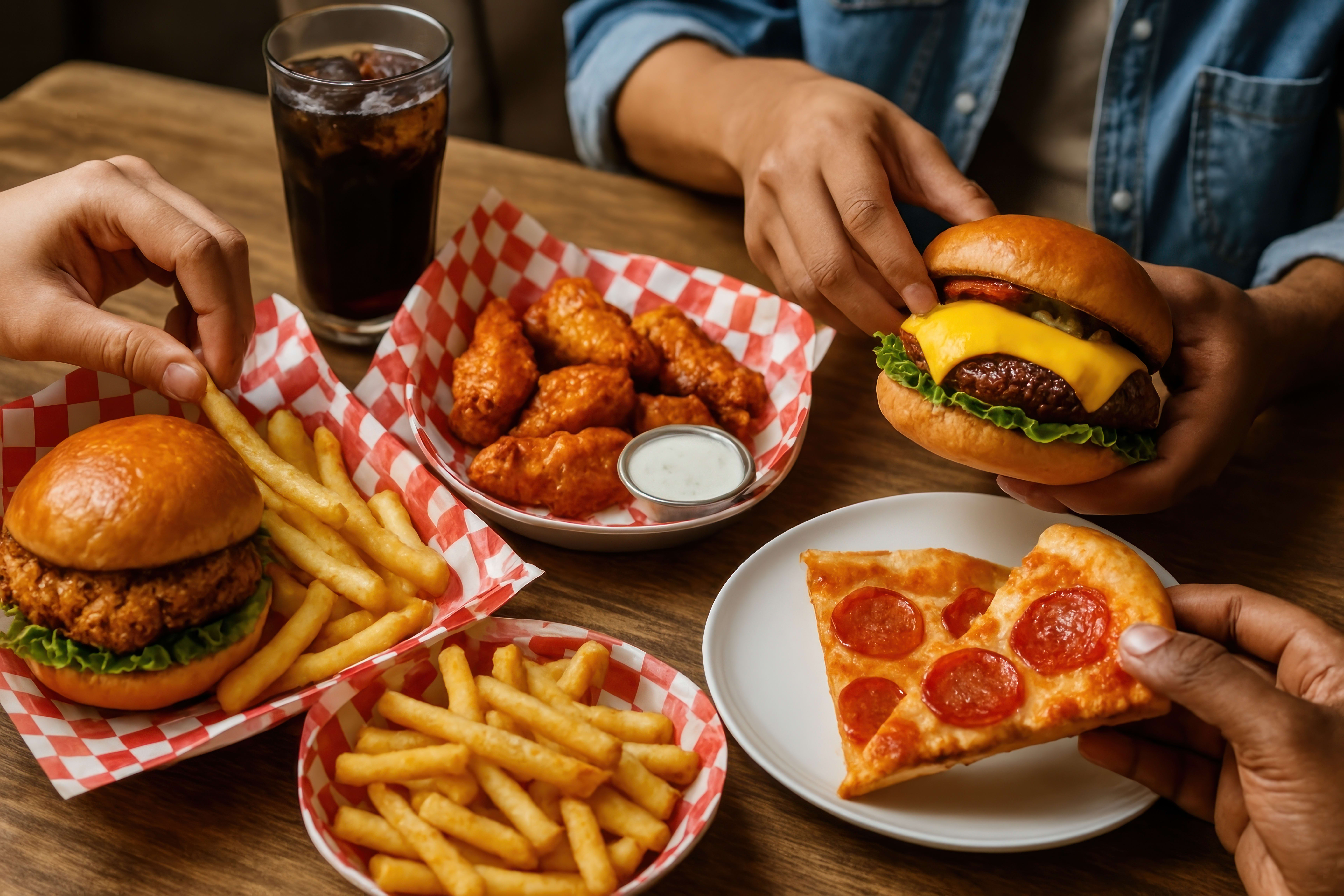
American adults now get 53% of their daily calories from ultra-processed foods. For children, that number is 62%.[1] The CDC confirmed these figures in its first-ever report on the subject, published in August 2025. First-ever. We have known this was happening for years and the federal government only just got around to measuring it officially.
More than half your calories. Every day. From products that bear almost no resemblance to food in any meaningful biological sense.
I want to be specific, because “ultra-processed” is a term that lets the industry hide behind abstraction. Here is what it actually means: these are industrial formulations containing ingredients that did not exist in the human food supply until the 20th century and whose long-term biological effects were never independently verified before they were put in everything you eat.
Petroleum-derived synthetic dyes: Red No. 40, Yellow No. 5, Yellow No. 6, Blue No. 1. Added to thousands of products to make them visually appealing. Red No. 3, used for decades, was finally banned by the FDA in January 2025 after the agency’s own data showed it causes cancer in animals.[2] It took until 2025.
High-fructose corn syrup, engineered to be sweeter and cheaper than sugar, metabolized by the liver differently than naturally occurring sugars, and linked to fatty liver disease, insulin resistance, and obesity.[3]
Emulsifiers like carrageenan and polysorbate 80, added to improve texture and shelf life, with emerging research suggesting they disrupt gut microbiome integrity and promote systemic inflammation.[4]
Artificial preservatives including BHA and BHT, added to prevent oxidation in packaged foods, classified as reasonably anticipated human carcinogens by the National Toxicology Program.[5]
Partially hydrogenated oils and industrial trans fats, so thoroughly documented as cardiovascular poison that the FDA banned them in 2018, but not before decades of consumption drove heart disease rates that still haven’t fully recovered.[6]
And over 1,000 other ingredients added to the food supply under the FDA’s “Generally Recognized As Safe” program, GRAS, in which food companies are permitted to certify the safety of their own ingredients without notifying the FDA or the public.[7] The MAHA Commission has specifically targeted this loophole for reform, and they are right to do so. An industry self-certifying its own ingredients as safe is not a regulatory system. It is an honor system operating inside a profit motive.
I agree with the core food agenda that Secretary Kennedy and the Make America Healthy Again movement have put on the national table: petroleum-based dyes should come out of the food supply, GRAS loopholes should be closed, ultra-processed food should be defined at the federal level, and SNAP benefits should not fund products with zero nutritional value. These are not partisan positions. They are basic public health positions backed by overwhelming evidence.
What It Is Doing to Your Body
The research on this is no longer at the frontier. It is settled, repeated, and alarming.
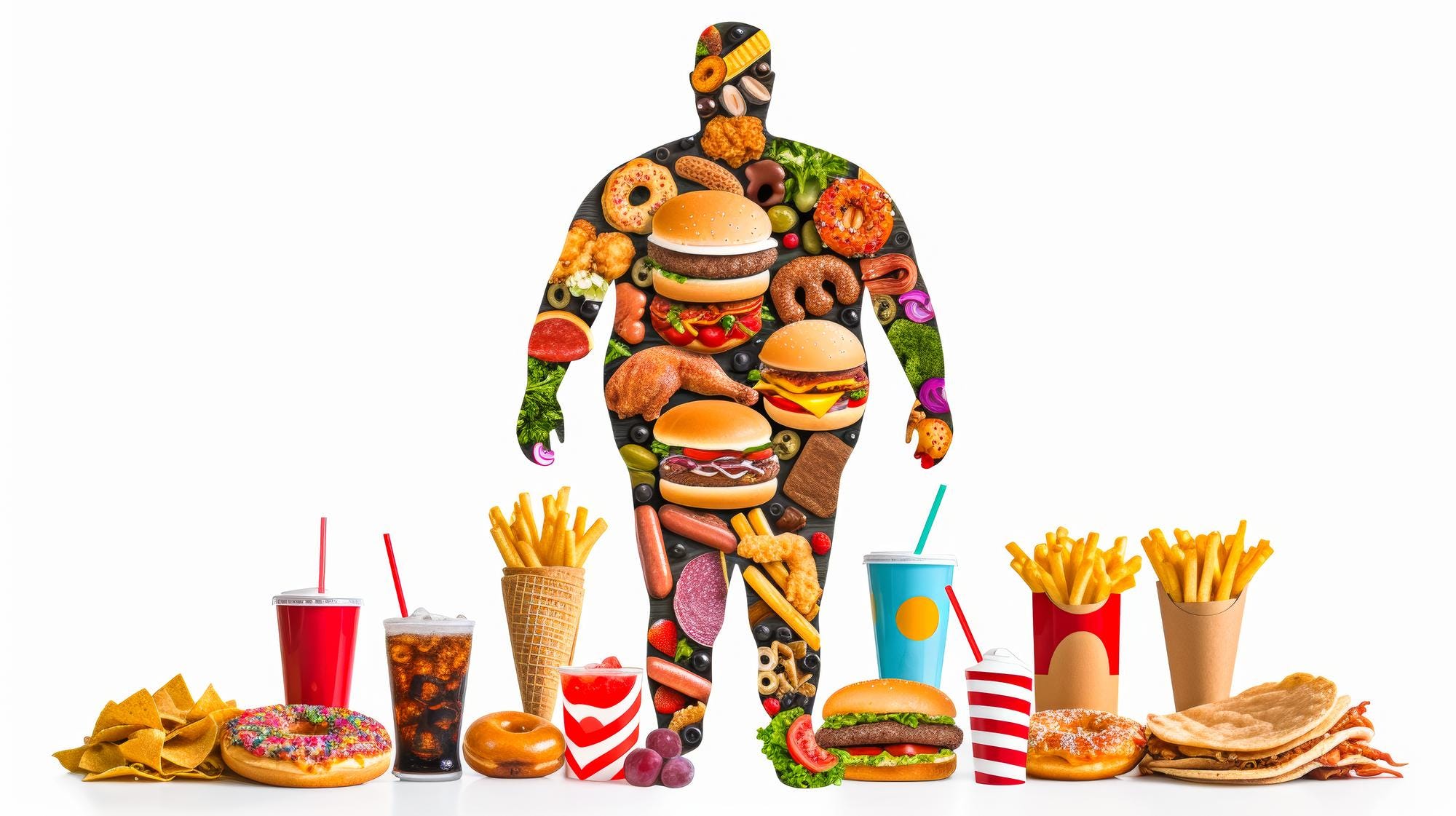
A 2024 umbrella review in The BMJ, covering 45 meta-analyses and nearly 10 million study participants, found convincing evidence that a diet high in ultra-processed foods increases the risk of death from cardiovascular disease by 50%.[8] Highly suggestive evidence placed the increased risk of obesity at 55%, Type 2 diabetes at 40%, and death from heart disease at 66%.[8]
The American Heart Association’s own 2025 Science Advisory confirmed that high versus low intake of ultra-processed foods is linked to a 25% to 58% higher risk of cardiometabolic outcomes and a 21% to 66% higher risk of mortality.[9]
Every additional 100 grams per day of ultra-processed food consumption is associated with a 14.5% higher risk of hypertension, a 5.9% increased risk of cardiovascular events, and a 19.5% higher risk of digestive diseases.[10]
These are not small signals. These are population-level findings, replicated across dozens of independent studies on tens of millions of people, in peer-reviewed journals at the highest level of evidence medicine produces.
The result, in real terms: more than 2 in 5 American adults now have obesity.[11] Treating diabetes and prediabetes costs this country over $327 billion annually.[12] Obesity-related medical care runs nearly $173 billion per year.[11] Ninety percent of all U.S. healthcare spending goes toward people with chronic and mental health conditions, most of them diet-related.[13]
The CDC projects that chronic disease will cost the United States $47 trillion between now and 2039.[14]
I’ll say that again. Forty-seven trillion dollars. Over the next 15 years. Driven in enormous part by conditions that trace directly to what is being sold at every grocery store, fast food counter, vending machine, and school cafeteria in America.
The Synthetic Dye Problem Is Bigger Than You Think
I want to spend a moment on food dyes specifically, because this is where the policy fight is most visible right now and where the industry’s behavior has been most egregious.
The synthetic dyes currently in the American food supply are petroleum derivatives. They are banned or heavily restricted in the United Kingdom, the European Union, Japan, and Australia, where products containing them must carry warning labels stating that the food “may have an adverse effect on activity and attention in children.”[15] In the U.S., they carry no warning. They are in children’s cereals, fruit snacks, sports drinks, candies, macaroni and cheese, and thousands of other products specifically marketed to children.
In 2025, roughly 75 bills targeting food dyes were introduced in 37 states.[16] West Virginia banned Red No. 40, Yellow No. 5, and Yellow No. 6 by law. California had already moved on four additives. Nestlé, Hershey, and PepsiCo pledged to begin removing synthetic colors voluntarily. The Consumer Brands Association asked its members to eliminate federally certified artificial dyes from products by end of 2027.[16]
The industry did not do this because they suddenly grew a conscience. They did it because the political pressure finally became unavoidable. These ingredients have been known to carry risk for decades. They stayed in the food supply because removing them cost money.
That calculation, what is profitable versus what is safe, is the operating logic of the entire ultra-processed food system. It has been from the beginning.
The Loop Nobody Talks About
Here is the part that should make you the most angry.
The food industry spends hundreds of millions of dollars every year lobbying against nutritional labeling requirements, sugar taxes, marketing restrictions to children, and front-of-pack warning labels.[17] They fund nutrition research designed to produce favorable conclusions. They helped shape decades of USDA dietary guidelines. They fought trans fat restrictions for years after the science was clear.
And when the chronic disease epidemic their products helped create shows up in your body, the hospital system is there to treat it. At $26,993 per year in employer-sponsored insurance premiums.[18] With a deductible that has gone up every year.[19] With an insurance company that will spend the next 90 days deciding whether your treatment is approved.
The food industry makes you sick. The healthcare industry charges you to manage it. Neither has a financial incentive for you to be well.
I am not speculating about this. I am describing the system as it functions, from inside it.
What I See in the Operating Room
I operate on patients whose joints have been destroyed in part by the inflammatory burden of decades of ultra-processed food consumption. I see the metabolic consequences, the effects of chronic systemic inflammation, the tissue changes that come from bodies running on ingredients they were never designed to process, every week.
These are not people who made bad choices. These are people who ate the food that was available, affordable, and relentlessly marketed to them by an industry that knew, and put the profit calculation ahead of the public health consequence.
I want fewer patients in my operating room, not more. The only path to that is a food supply that stops manufacturing the chronic disease that fills it.
What You Can Do Right Now
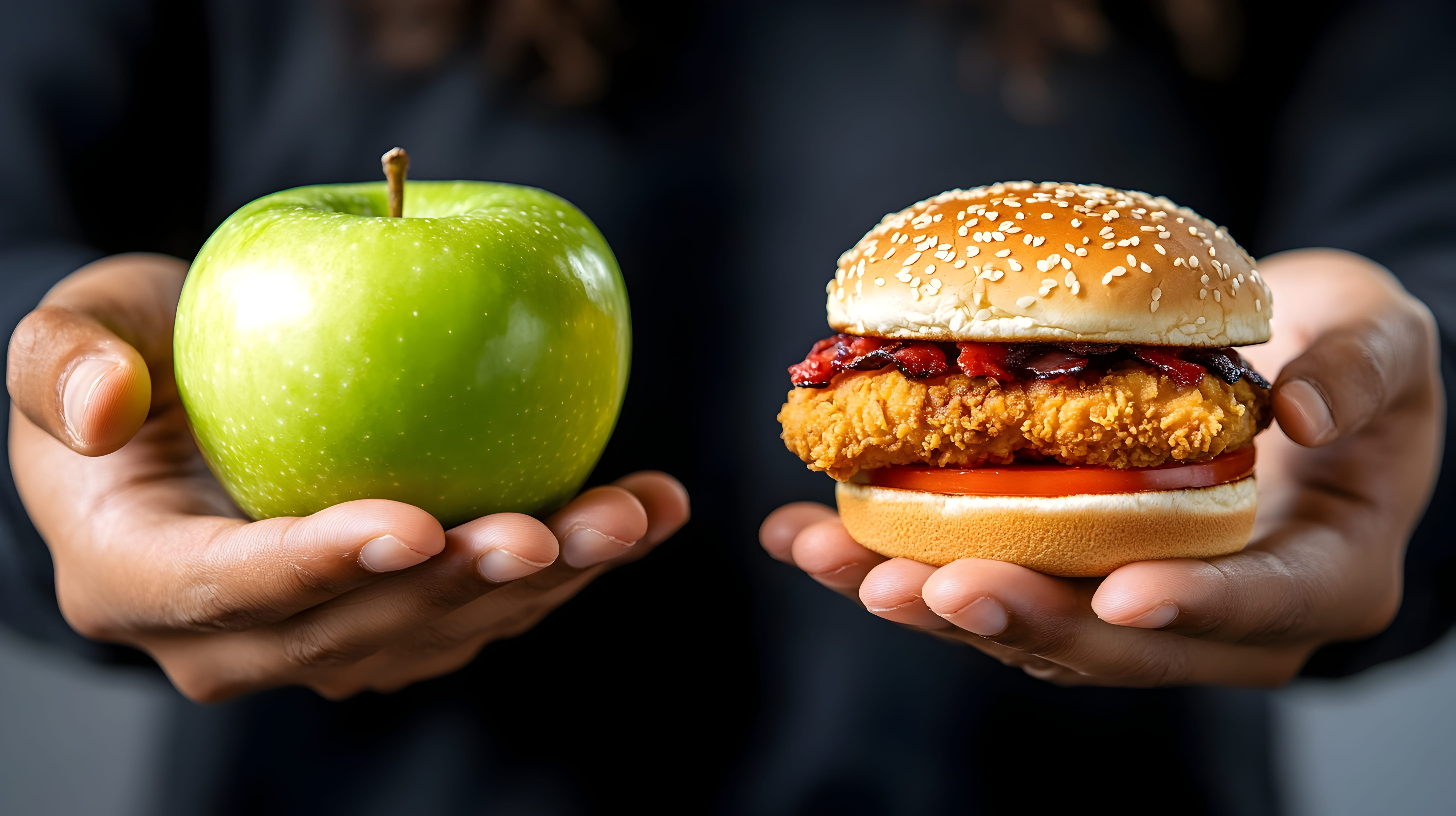
Read the ingredient label, not the nutrition facts panel. The nutrition facts panel is what the industry wants you to look at. Calories, fat grams, and protein are distractions. The ingredient list is where the truth is. If it contains synthetic dyes, HFCS, partially hydrogenated anything, or additives you cannot trace to a whole food source, that product is a bet against your long-term health.
Cook whole food when you can. Not as a lifestyle aspiration. As a defensive act. The data on what ultra-processed food does to your cardiovascular system, your metabolic health, and your mortality risk is overwhelming.
Support the food policy reforms that are actually grounded in evidence: mandatory front-of-pack warning labels, closure of the GRAS self-certification loophole, removal of petroleum-derived dyes from the food supply, and restrictions on ultra-processed food marketing to children. These are not radical positions. They are the standard in most of the developed world.
And when the food industry tells you their product is part of a balanced diet, ask who paid for that research.
Why I’m Writing This
I am inside the machine. I see both the food system’s consequences and the healthcare system’s response to them, up close, every week. Most people with the standing to speak about this from the inside have financial relationships that keep them quiet.
I don’t.
The Incision Point exists because the American public deserves a straight account of what is actually happening to their health, who is responsible, and what can actually change it. Not from a commentator. From a physician who is operating on the results.
Subscribe if you want to keep reading. Share this if it made you angry enough to want someone else to see it.
That anger is appropriate. Use it.
What ingredient on a food label has surprised or disturbed you most? Drop it in the comments.
Footnotes
CDC/NCHS Data Brief No. 536, August 2025. “Ultra-Processed Food Consumption Among U.S. Children and Adults, August 2021-August 2023.” cdc.gov
FDA, “FDA Revokes Authorization for the Use of Red No. 3 in Food and Ingested Drugs,” January 2025. fda.gov
Multiple sources including NIH research on fructose metabolism and fatty liver disease; Stanhope KL et al., multiple publications on high-fructose corn syrup and metabolic outcomes.
Chassaing B et al. “Dietary emulsifiers impact the mouse gut microbiota promoting colitis and metabolic syndrome.” Nature. 2015;519:92-96. Subsequent human studies have supported the association.
National Toxicology Program, U.S. Department of Health and Human Services. Report on Carcinogens listings for BHA and BHT.
FDA, “Final Determination Regarding Partially Hydrogenated Oils,” 2018. fda.gov
MAHA Commission Assessment, May 2025; ABC News reporting on GRAS reform proposals, September 2025.
Lane MM et al. “Ultra-processed food exposure and adverse health outcomes: umbrella review of epidemiological meta-analyses.” BMJ. 2024;384:e077310. doi:10.1136/bmj-2023-077310
American Heart Association Science Advisory, 2025. newsroom.heart.org
American College of Cardiology analysis of systematic review data, May 2025. acc.org
CDC, “Fast Facts: Health and Economic Costs of Chronic Conditions,” August 2025. cdc.gov
American Diabetes Association, cost of diabetes data, cited 2025.
CDC, “Health and Economic Costs of Chronic Diseases.” cdc.gov
Partnership to Fight Chronic Disease/GlobalData. December 2025. fightchronicdisease.org
European Food Safety Authority assessments of synthetic food dyes; UK Food Standards Agency labeling requirements.
KFF Health News, “RFK Jr.’s MAHA Movement Has Picked Up Steam in Statehouses,” January 13, 2026. kffhealthnews.org
Multiple lobbying expenditure analyses cited in Ballard Brief, BYU, “The Overconsumption of Ultra-Processed Foods in the United States,” 2024.
KFF 2025 Employer Health Benefits Survey, October 2025. doi:10.1377/hlthaff.2025.01106
KFF Health News, “A New Car vs. Health Insurance? Average Family Job-Based Coverage Hits $27K,” October 2025.
Editorial note on seed oils: The research on isolated seed oil consumption is genuinely contested, with the mainstream peer-reviewed consensus, including 2025 findings from Johns Hopkins, the American Heart Association, and multiple meta-analyses, finding that linoleic acid in seed oils is not the independent driver of inflammation or cardiovascular disease that MAHA messaging claims. The article frames seed oils as one industrially deployed ingredient within the broader ultra-processed food system, which is the scientifically defensible position.
Brilliantly stated and extremely sobering!! This is a perspective everyone needs to read! Thank you for fighting for us all!!!!